How Open Source Is Fueling a New Generation of Startups
Some of today’s most exciting startups aren’t building everything from scratch. They’re building on open source.
Open-source software—technology whose code is publicly available to use, study, and often modify—has become a powerful launchpad for new businesses. It gives founders access to tools that once required large engineering teams and substantial budgets. Just as importantly, it lets them test ideas with real users before committing to a full commercial product.
The result is a startup landscape where innovation can move quickly, with communities helping shape what comes next.
A faster way to get started
Starting a company is a race against time and limited resources. Open-source frameworks, databases, and development tools can cut months from the early stages of building a product.
A small team, for example, can use existing machine-learning libraries to create an AI-powered service, or rely on open-source infrastructure to launch an app without designing every component itself. Instead of reinventing standard tools, founders can focus their effort on what makes their product distinctive: its user experience, workflow, or understanding of a specific market.
That speed matters. Startups can share an early version with customers, gather feedback, and adjust before spending heavily on features people may not need.
A community can be part of the product
Open source offers something beyond code: a built-in opportunity to collaborate.
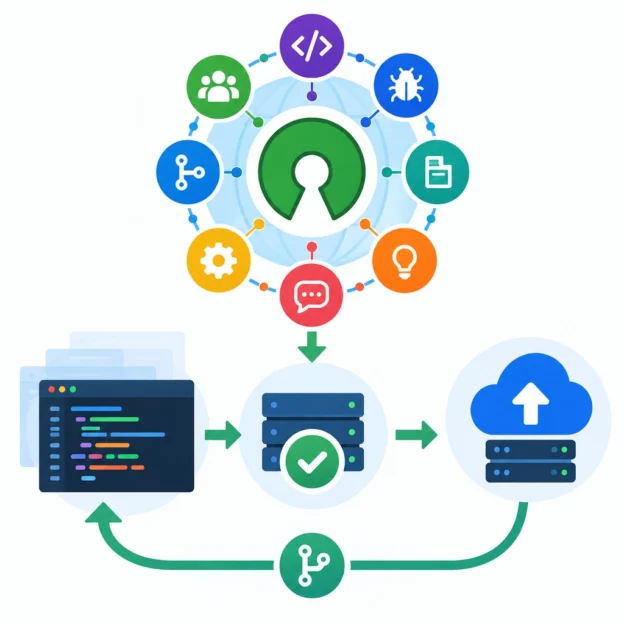
Developers who use a project may report bugs, suggest improvements, write documentation, or contribute features. Their feedback can reveal what works in practice—and what doesn’t—across many different environments. For startups, that community can become an informal testing network and a source of product ideas.
A vibrant project can also attract users before a company has a big marketing budget. Developers often discover tools through GitHub, technical forums, newsletters, and recommendations from peers. When a project genuinely solves a problem, people may spread the word because they want to use it, not because they were targeted by an ad.
Of course, a community isn’t a substitute for customer research. Contributors and paying customers may have different needs. Startups still have to listen carefully and decide which requests fit their product’s direction.
Turning free software into a business
If the core code is openly available, where does the revenue come from? Startups have several options.
Some offer a hosted version of their software. Customers can use the service without managing servers, updates, or maintenance themselves. Others charge for enterprise features, such as advanced security, access controls, compliance tools, or priority support. Consulting, training, and custom integrations can also provide income.
This approach can lower the barrier to trying a product. A developer might begin with the free, self-managed version, then recommend the paid service when their team needs convenience or additional safeguards.
But the business model needs to match the project’s license and community expectations. If users feel that a company benefits from their contributions while giving little back, trust can erode. Successful open-source companies tend to be clear about what is free, what is paid, and how they support the project.
Trust and transparency as advantages
Open-source development can help startups earn credibility, especially when their software handles important data or runs inside a customer’s infrastructure. Customers can inspect the code, evaluate how a tool works, and see how quickly issues are addressed.
Transparency does not automatically mean a product is secure or reliable. A public codebase still needs careful maintenance, security reviews, and responsive support. Yet openness can make scrutiny easier—and invite more people to spot problems.
It also gives customers flexibility. They may be less worried about being locked into a vendor if the underlying code can be moved, adapted, or maintained independently. For businesses wary of putting essential systems in the hands of a young company, that can make a new product easier to adopt.
The trade-offs behind the opportunity
Open source isn’t a shortcut to guaranteed success. Supporting a popular project takes time, and turning community interest into dependable revenue can be difficult. Startups must balance free contributions with paid work, avoid overpromising support, and plan for the long-term health of the code.
There are practical risks, too: licensing requirements, dependency security, and the possibility that a larger company could build on the same project. Strong execution, customer relationships, and a clear product vision still matter.
Open source gives startups a different kind of starting point: shared tools, visible work, and a chance to build alongside users rather than behind closed doors. The strongest companies treat it not simply as a way to reduce costs, but as a way to earn trust and create something useful with others. When that collaboration is matched with a sustainable business, a small idea can grow into technology that reaches far beyond its original team.